

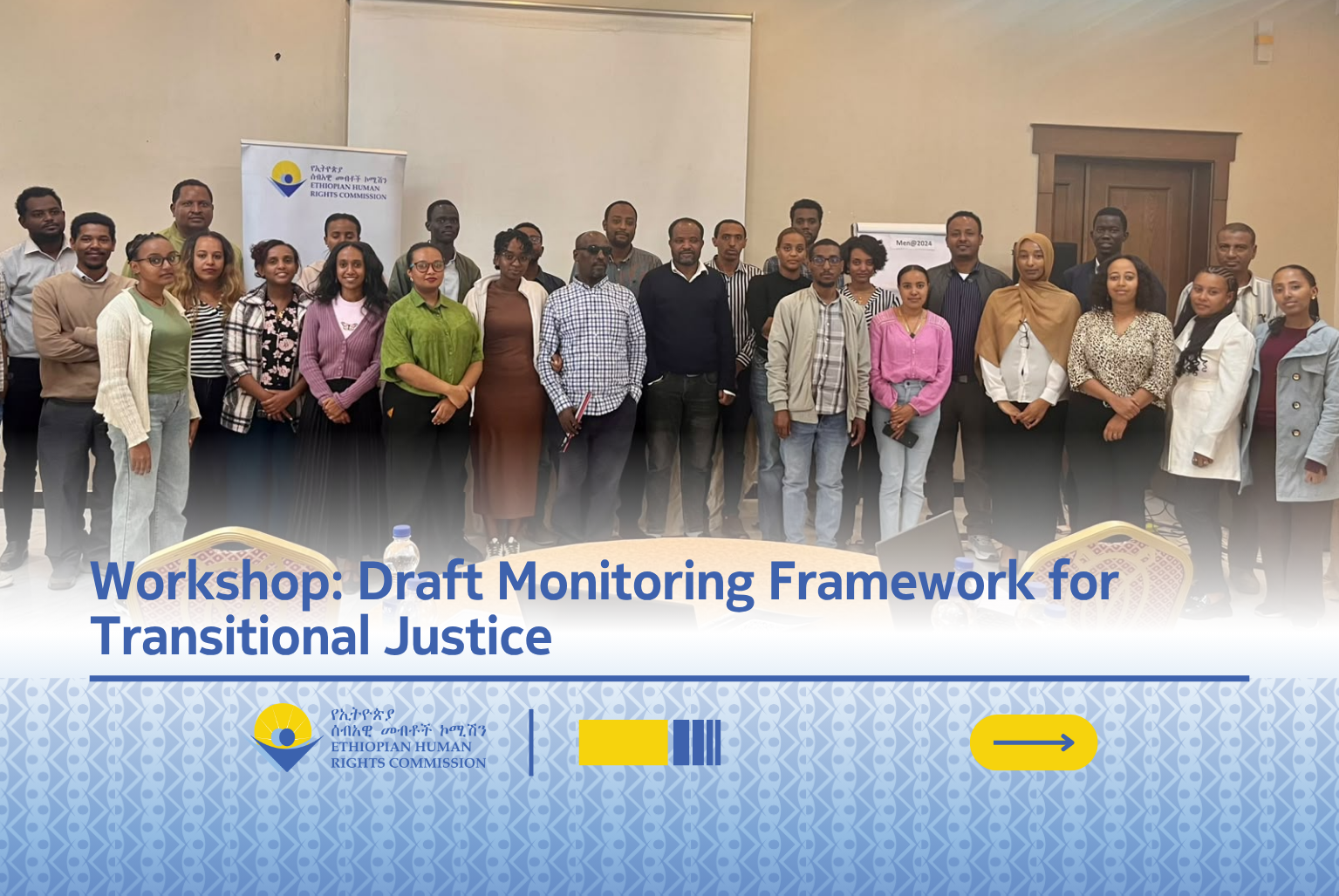
The Ethiopian Human Rights Commission (EHRC) conducted an awareness-raising workshop in Bishoftu town from July 13 to 17, 2018 E.C., aimed at strengthening its institutional capacity and readiness to monitor the transitional justice process. Among the discussion topics at the workshop was the draft monitoring framework prepared by EHRC to track the implementation of transitional justice. Experts drawn from EHRC’s head office and branch offices participated in the workshop.
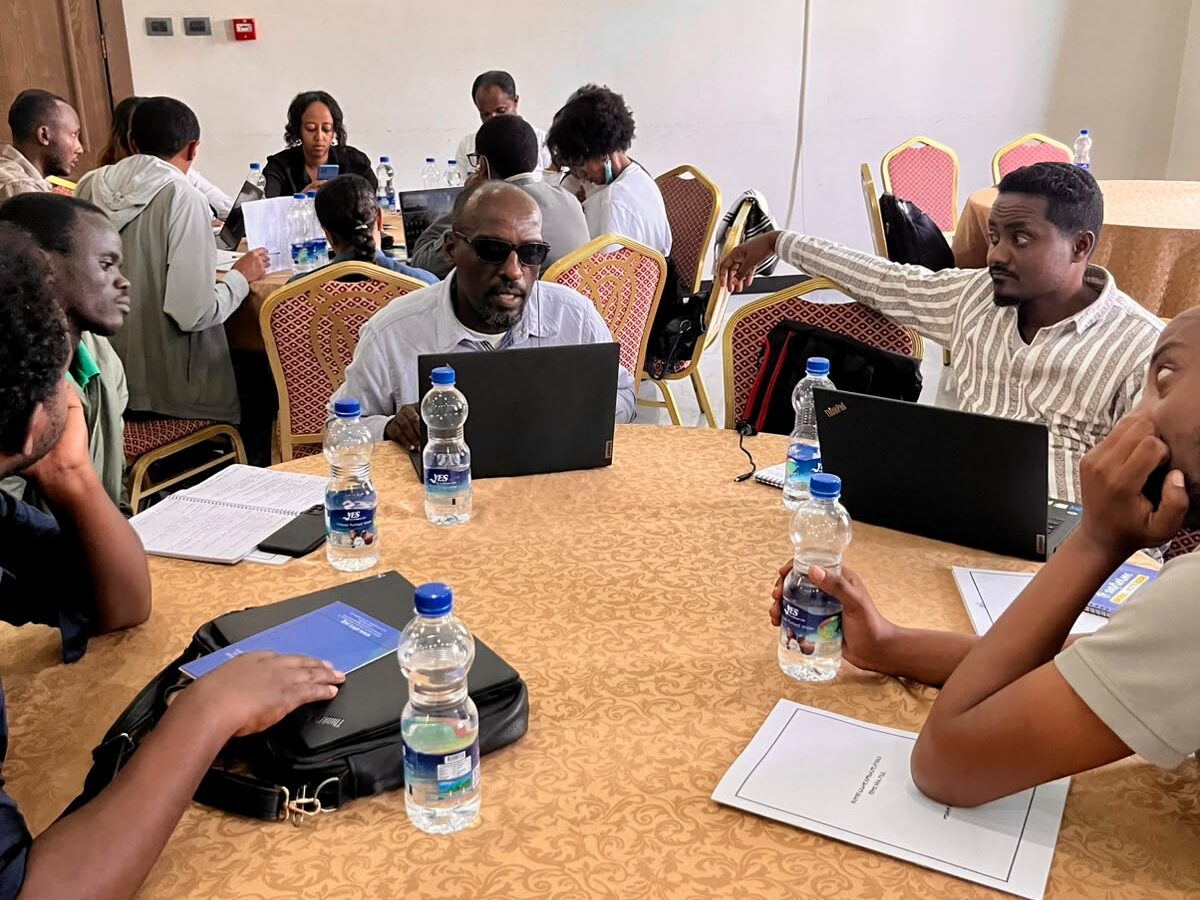
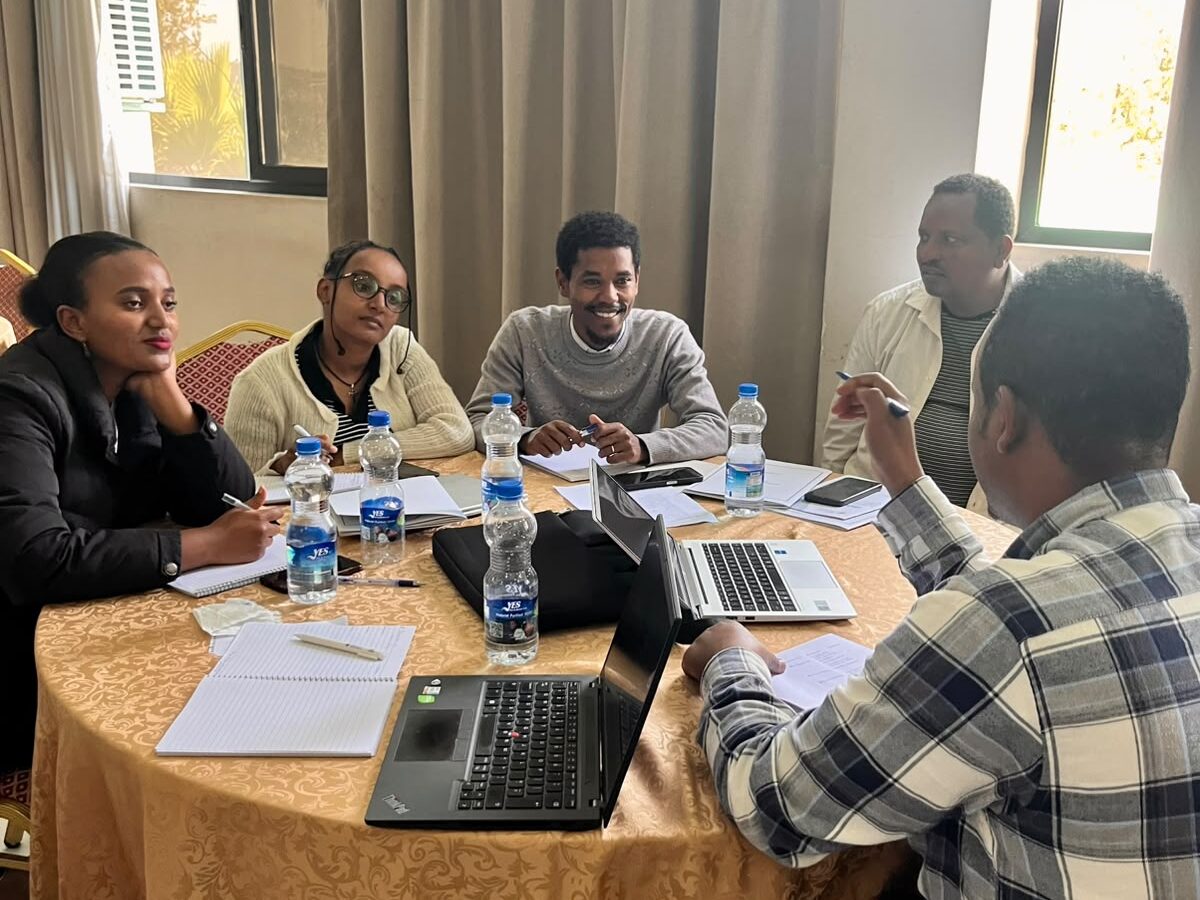
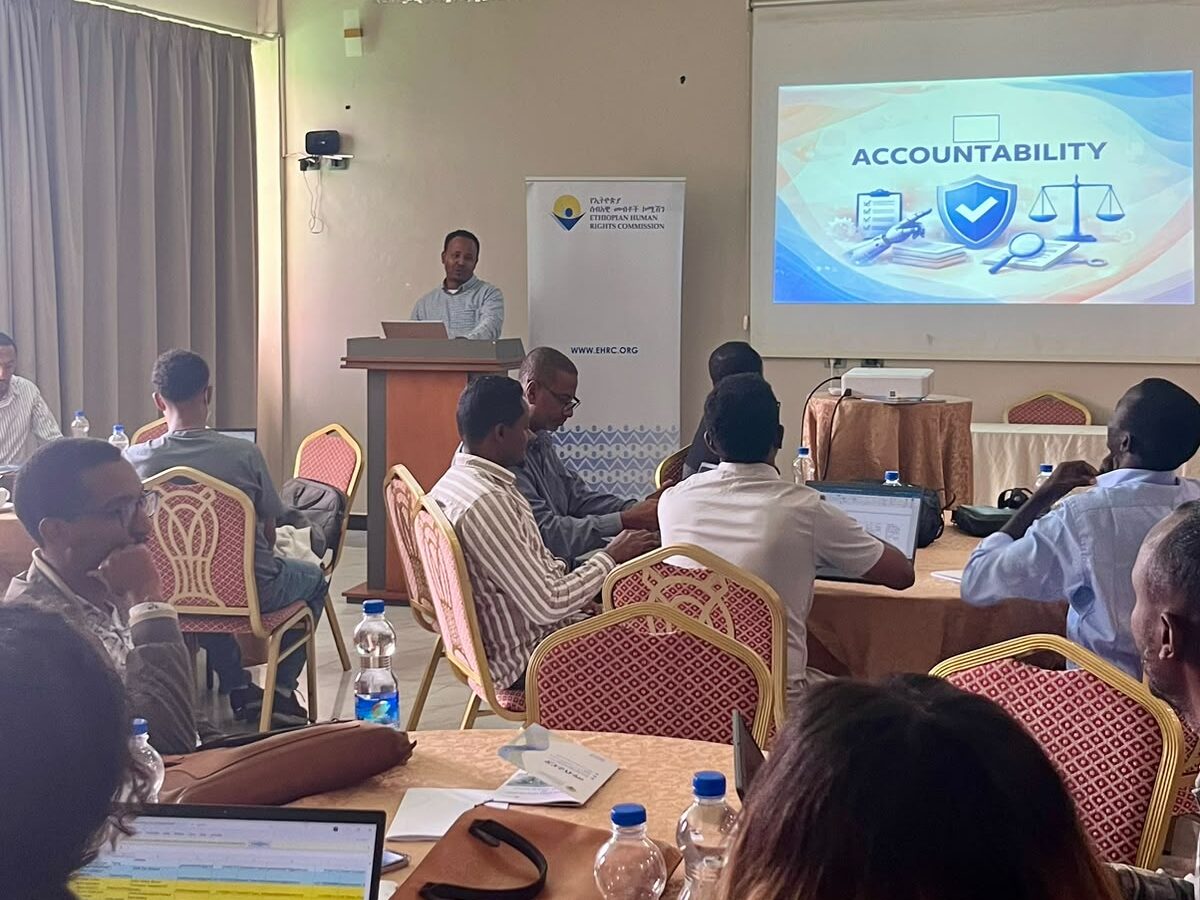
The workshop highlighted the importance of independent monitoring to ensure that the transitional justice process is victim-centered, inclusive, and compliant with international human rights standards. In this regard, participants noted that the draft monitoring framework would help EHRC closely track the credibility and fairness of the process, as well as its alignment with the Constitution and international human rights instruments and standards.
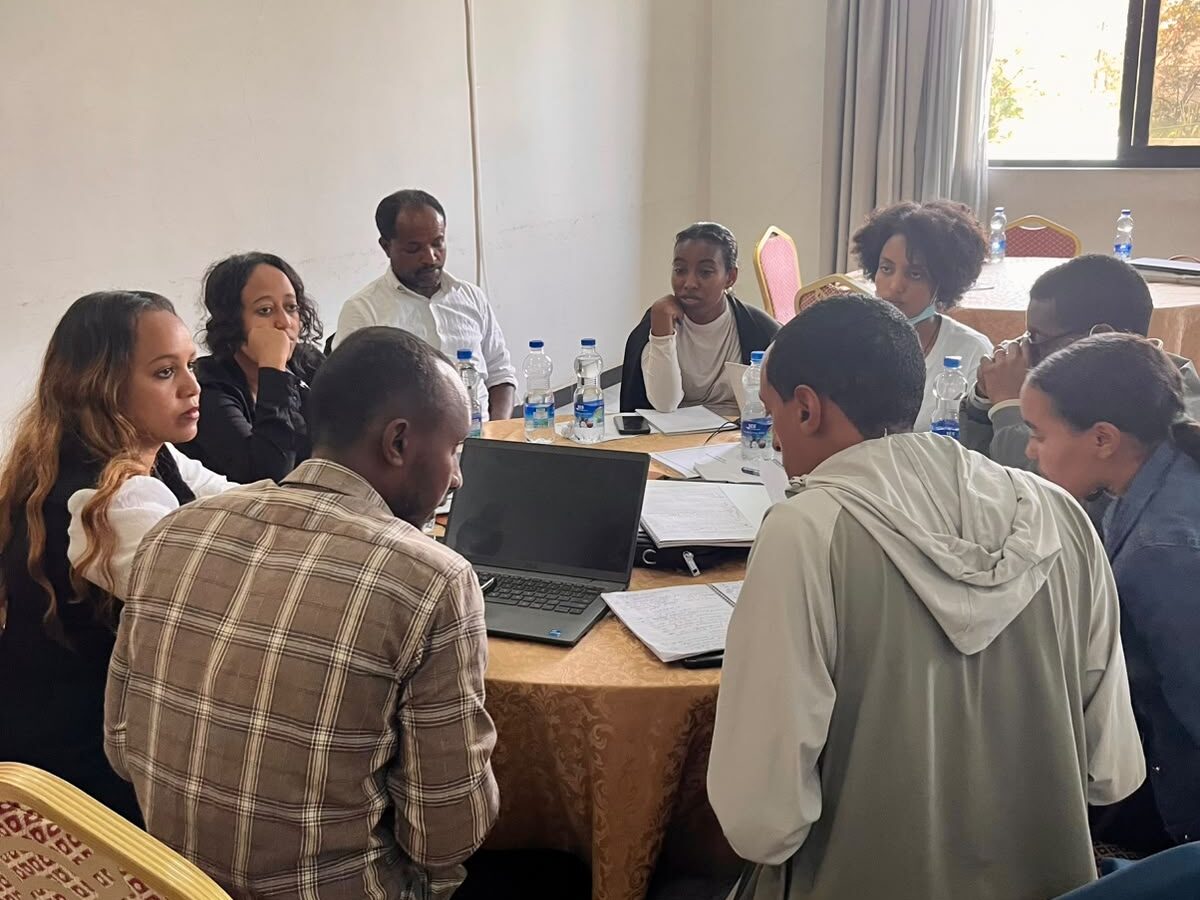
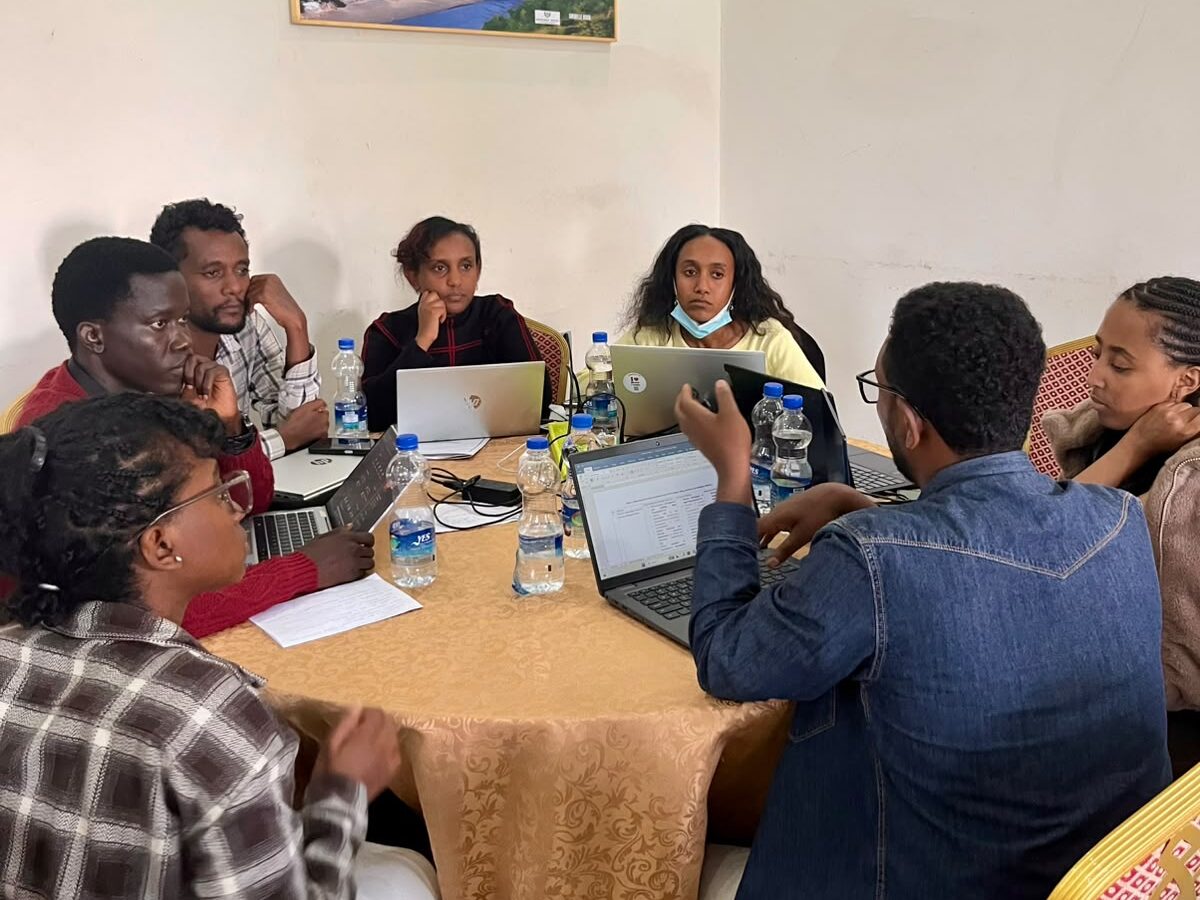
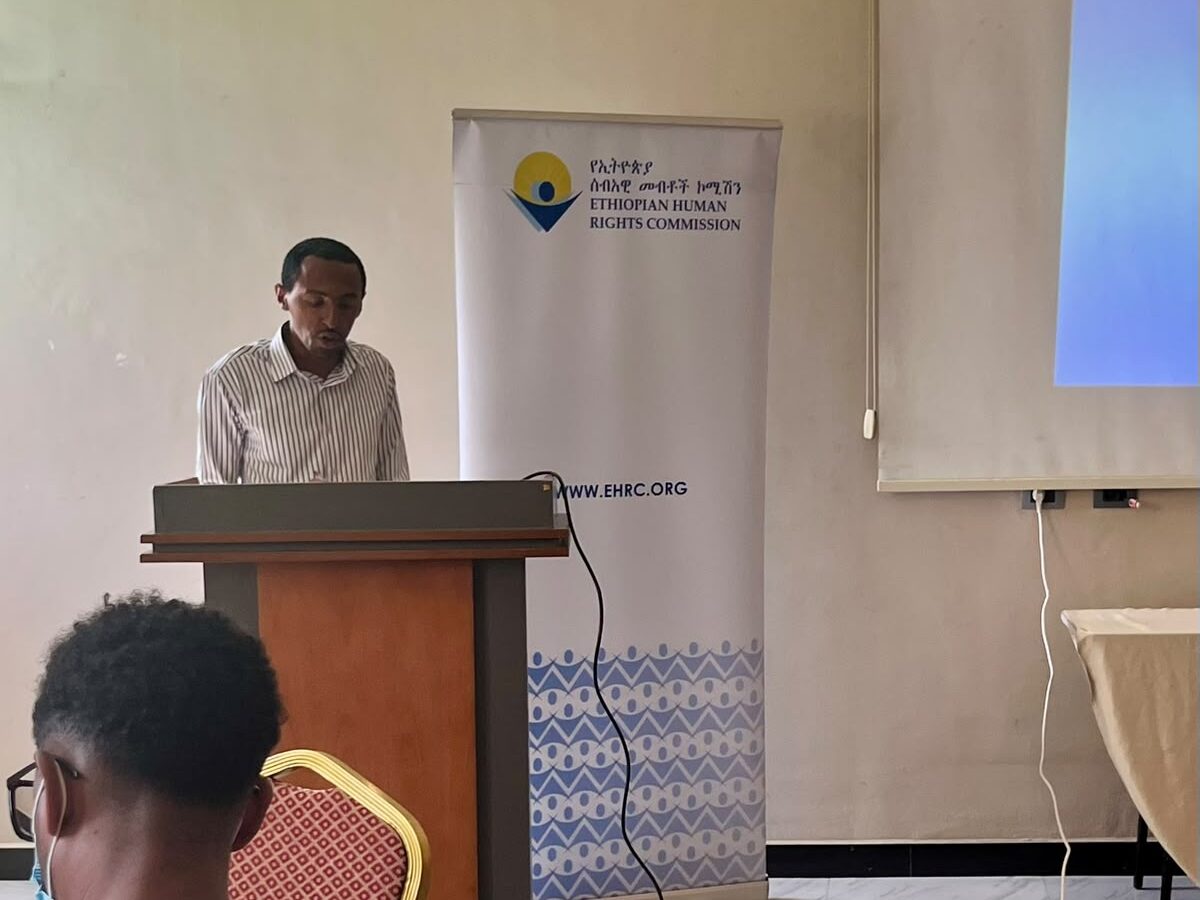
During the workshop, participants engaged in extensive analysis and discussion on the content of the National Transitional Justice Policy, activities undertaken so far, EHRC’s strategic role, the draft monitoring framework, and the principles and criteria for monitoring. In addition, the various work units of EHRC exchanged experiences on their respective monitoring methods, reporting approaches, metrics, and indicators, which helped further refine the draft monitoring framework.
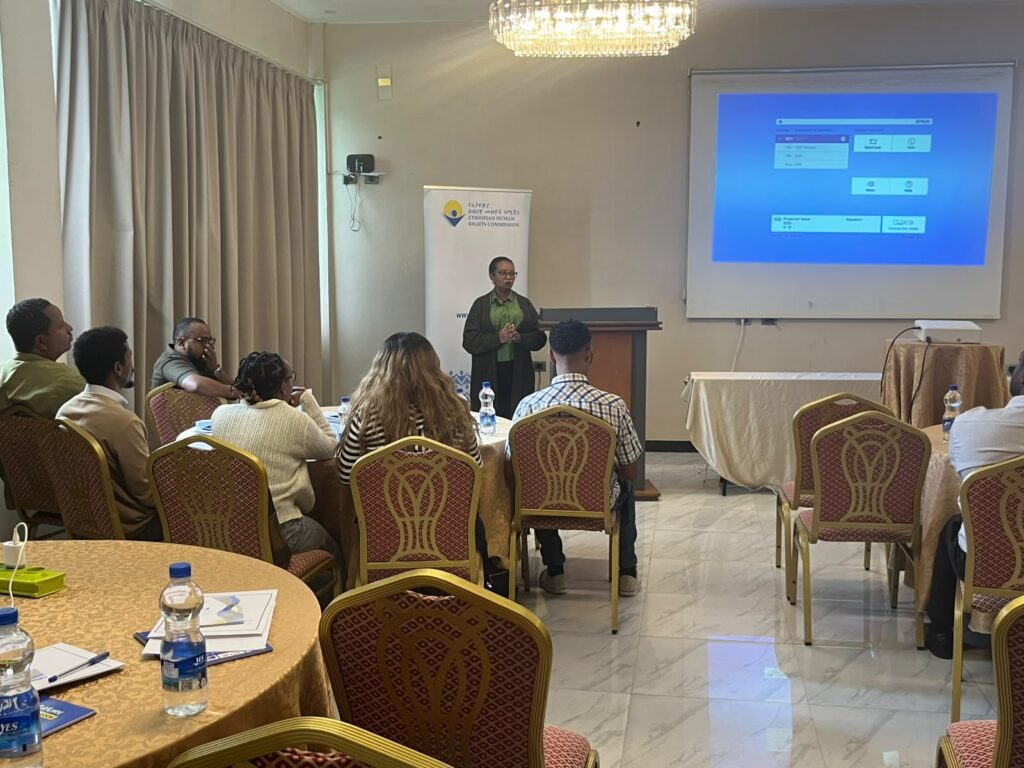
In her remarks at the workshop, Kalkidan Dereje, Chief of staff for the Office of the Chief Commissioner of EHRC, emphasized the need to strengthen EHRC’s role in independent human rights monitoring within the transitional justice process. She further stressed that the draft monitoring framework should adequately reflect EHRC’s mandate, incorporate the experience and knowledge of all its work units, and enable consistent, evidence-based monitoring and reporting throughout the process.