

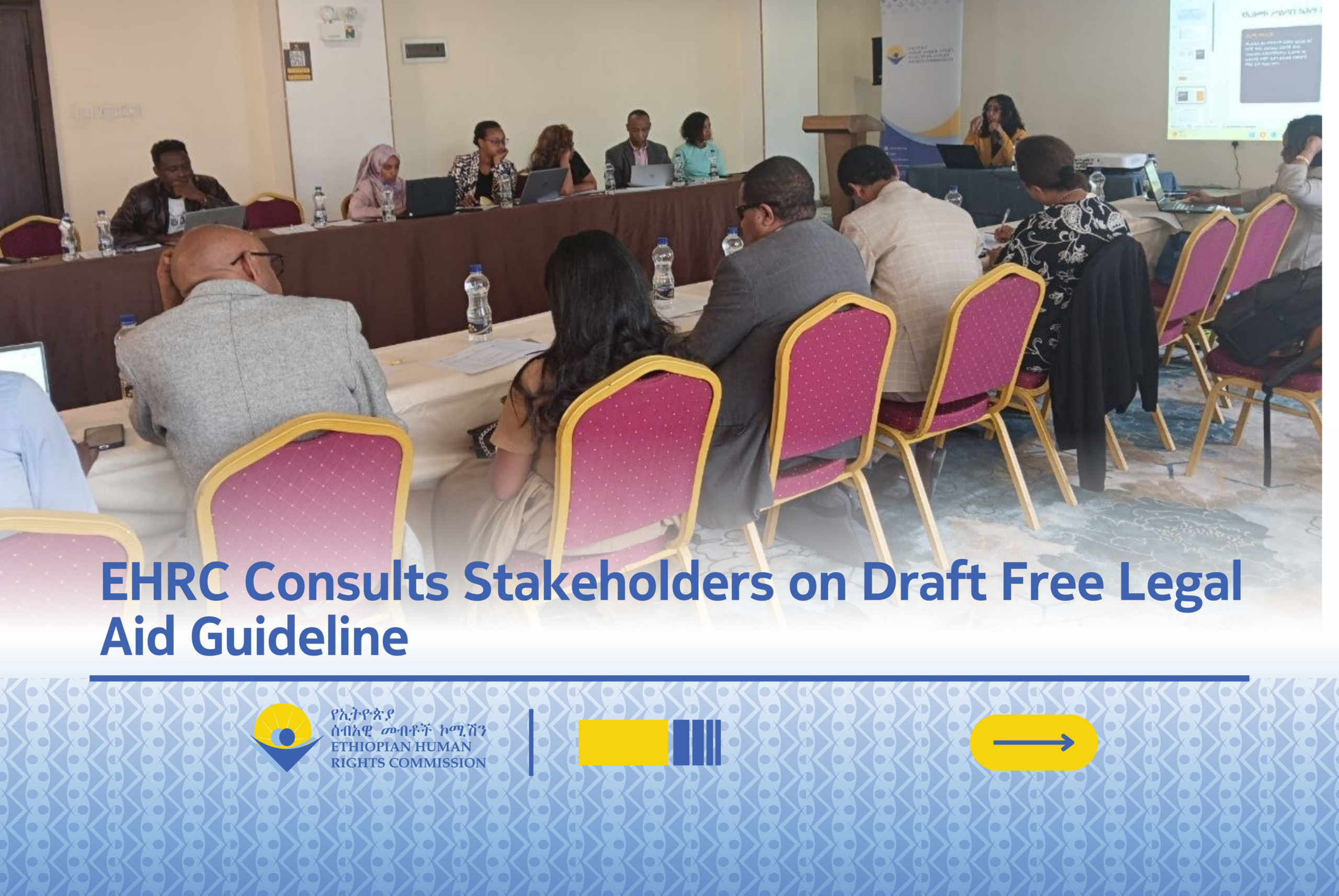
The Ethiopian Human Rights Commission (EHRC), in collaboration with SOS Children’s Villages-Ethiopia, convened a multi-stakeholder consultative meeting on October 30, 2026, in Addis Ababa to review a draft guideline designed to monitor the provision of free legal aid services and support institutions delivering such services.
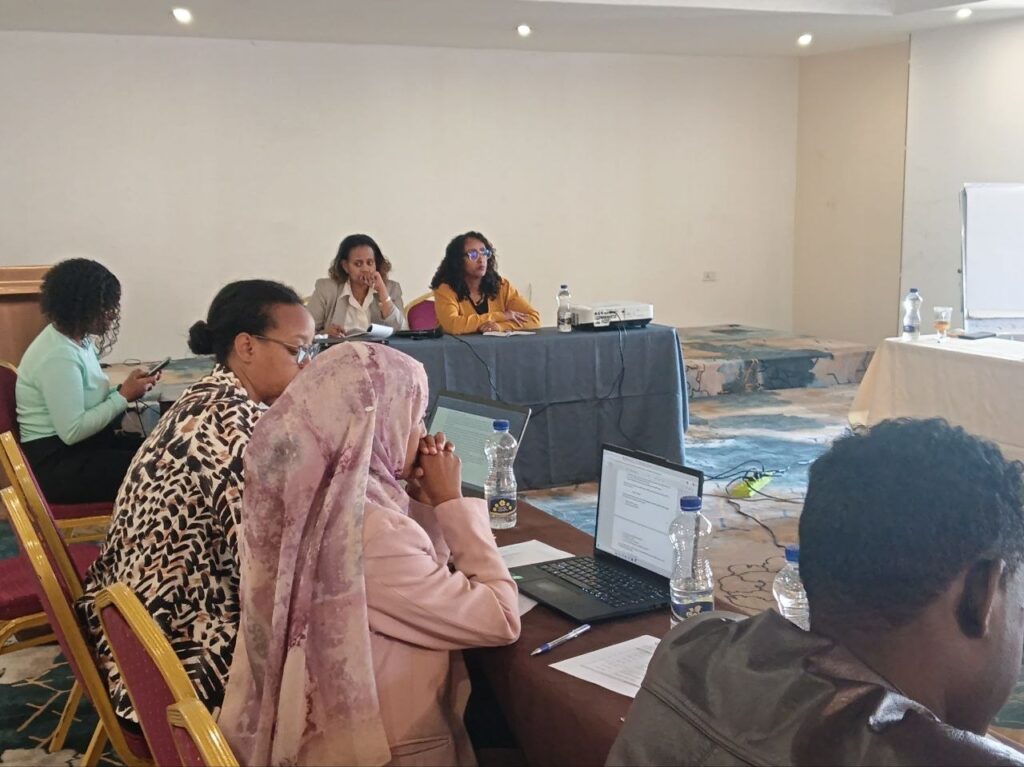
The consultation brought together senior EHRC officials and members of a national experts committee drawn from the Ministry of Justice, the Federal Supreme Court, the Federal Public Defender Office, a representatives from law Office, University law Schools, Civil Society Organizations (CSOs) providing free legal aid, and partner organizations.
The EHRC has been consistently working to expand access to justice, improve the quality of free legal aid services, and promote human rights-based service delivery across the country. During the meeting, it was highlighted that alongside the various initiatives undertaken by the Commission in recent years, expanding access to free legal aid and enhancing service quality have become key priorities under its current five-year strategic plan.
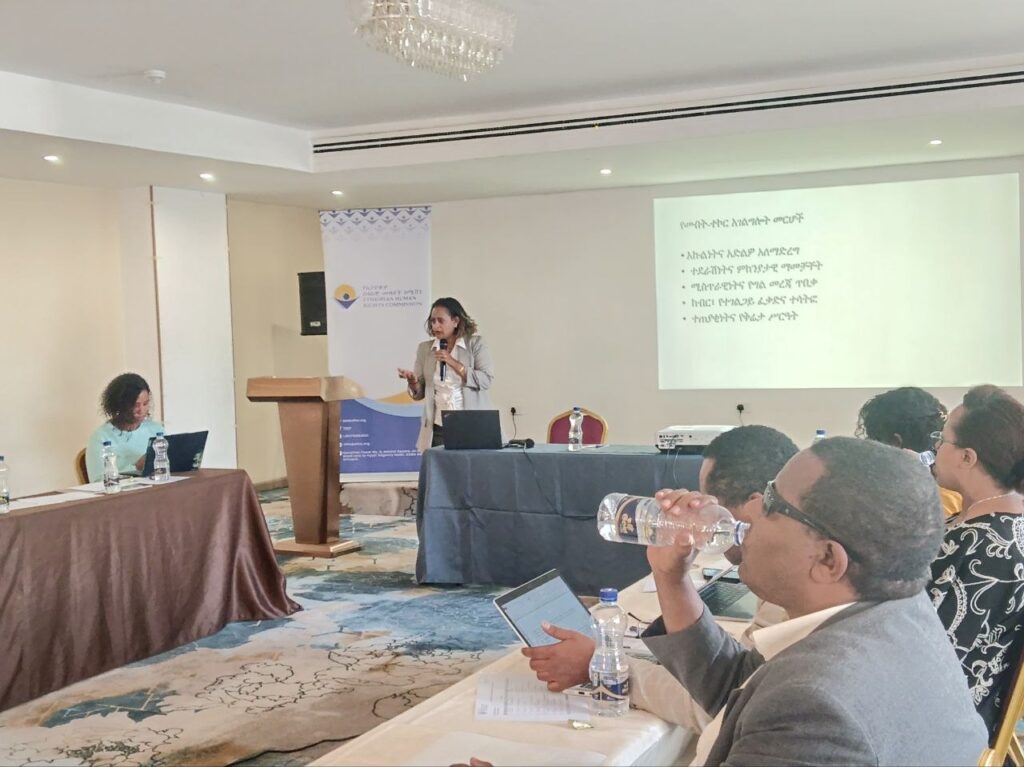
A baseline study assessing the current landscape and key operational gaps of free legal aid services provided by various institutions, along with the draft guideline developed to monitor free legal aid services and support service providers in accordance with the EHRC’s statutory mandate, was presented to participants for extensive deliberation.
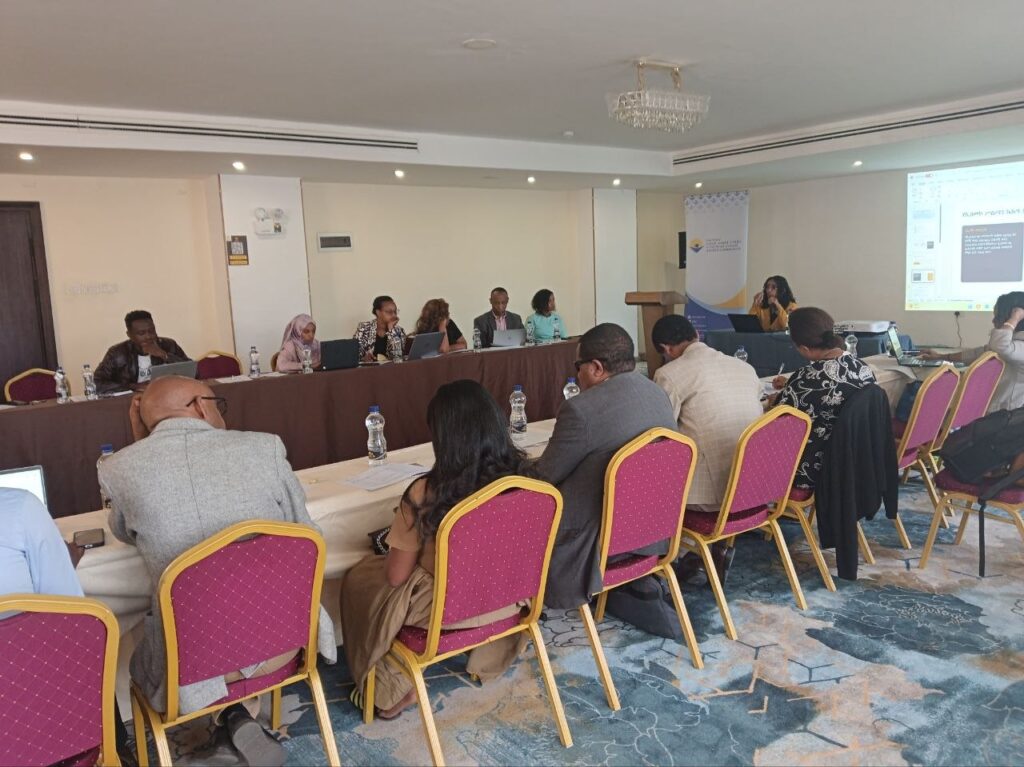
Participants noted that the draft guideline clearly sets out the guiding principles, quality and standards, and minimum benchmarks governing free legal aid services in the country. They also highlighted that the directive’s comprehensive inclusion of services and support that vulnerable community members ought to receive within the justice system cross-referenced with international human rights treaties ratified by Ethiopia, the FDRE Constitution and other relevant domestic laws significantly contribute to improving service quality. Conversely, constructive feedback aimed at enhancing the guideline’s presentation, structure, substantive content, terminological consistency, definition, and other refining elements was provided and discussed. Achamyelesh Teferi, a representative of SOS Children’s Villages-Ethiopia, underscored the vital role of free legal aid services in protecting the rights of children, young person’s transitioning out of alternative care, and other vulnerable groups. Highlighting the organization’s longstanding commitment to strengthen access to justice and child protection system, she described the draft guideline as a timely and valuable initiative. She particularly emphasized the importance of ensuring quality, consistency, and accountability must be ensured in legal aid services provided to children. She further stressed that effective implementation requires strong collaboration among government institutions, EHRC and CSOs, reaffirming that SOS Children’s Villages is committed to work with all partners to support the process and improve children’s access to justice nationwide.
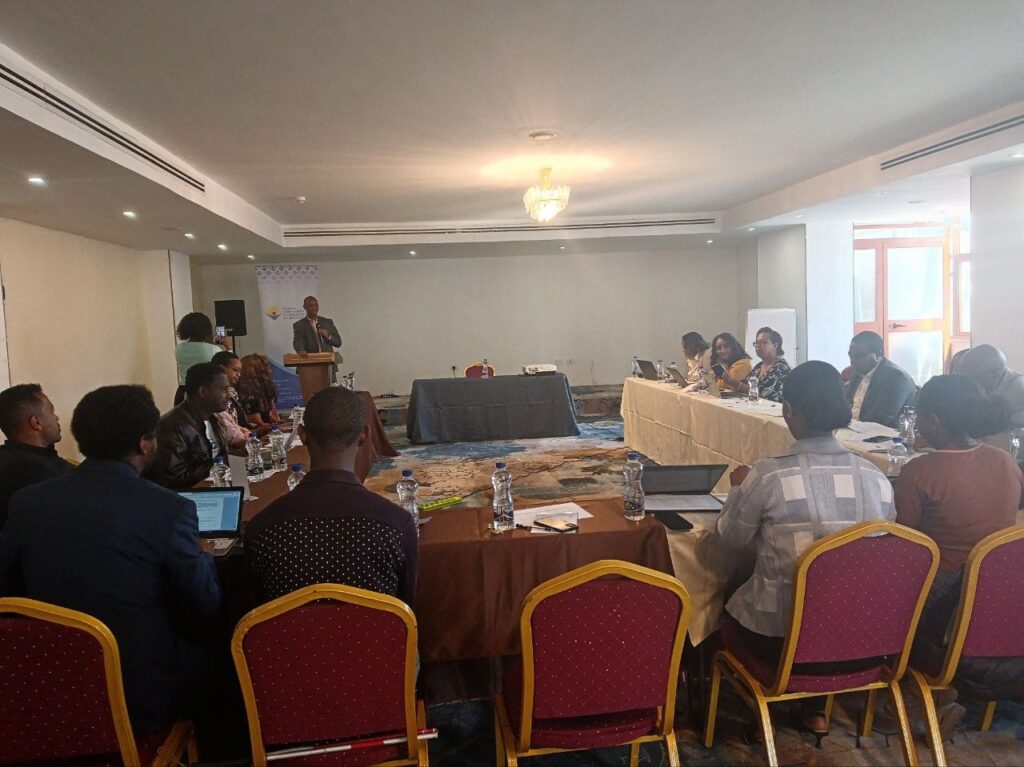
Dr. Mizanie Abate, EHRC Deputy Chief Commissioner, highlighted the need to strengthen the quality, consistency, and oversight mechanisms of free legal aid services at the national level. He explained that the draft guideline would help establish a standardized national framework, set minimum service quality standards, and reinforce both internal monitoring and external oversight mechanisms. Dr. Mizanie reaffirmed the Commission’s commitment, under its new strategic plan, to expanding access to human rights-based free legal aid services in collaboration with stakeholders, adding that once the guideline is formally adopted, the EHRC will carry out extensive dissemination and awareness-raising activities and continue providing the necessary support to ensure relevant institutions implement it effectively.