

The Ethiopian Human Rights Commission (EHRC) participated in a National Dialogue forum organized by the House of Peoples’ Representatives entitled “The Advancement of Judicial and Democratic Institutions for a Successful Nation-Building” on March 3, 2026, in Addis Ababa.
The forum brought together the Speaker of the House of Peoples’ Representatives, Tagesse Chafo; the President of the Federal Supreme Court, Tewodros Mihret; EHRC Chief Commissioner Berhanu Adello; the Chief Commissioner of the National Dialogue Commission, Professor Mesfin Araya; the National Election Board of Ethiopia’s Chairperson, Melatwork Hailu; the Federal Auditor General, Meseret Damte; the Chief Ombudsman of the Ethiopian Institution of the Ombudsman, Semegn Wube; ministers, senior officials as well as experts from the aforementioned institutions, and presidents of regional courts.
During the forum, judicial and democratic institutions presented the reform activities they have undertaken over the past five years aiming at successful state building, alongside their achievements and future strategic directions.
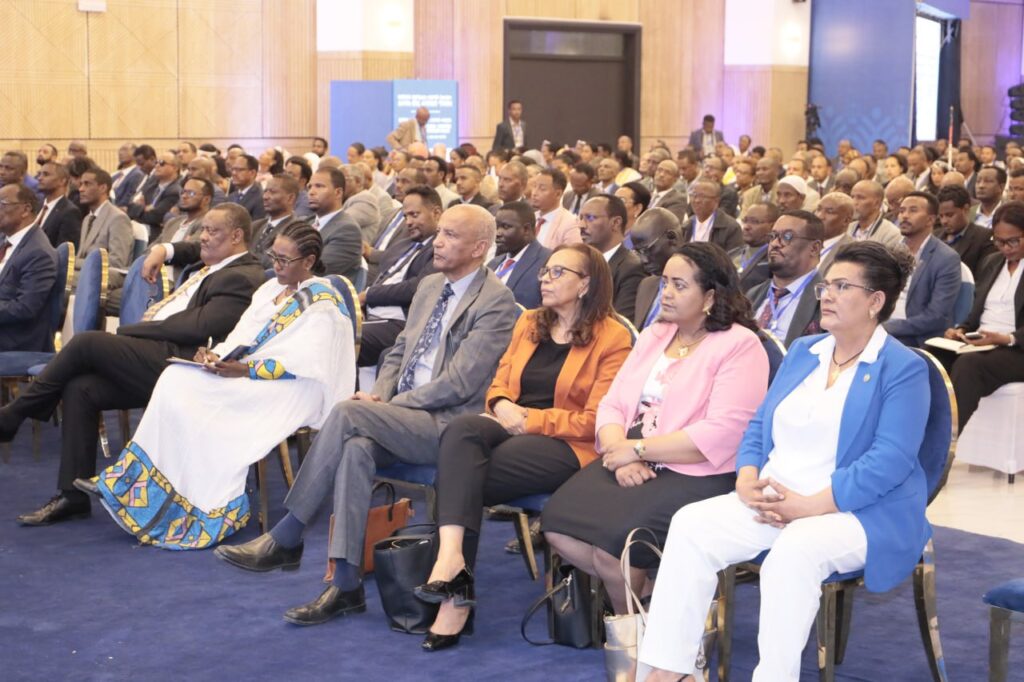
EHRC Chief Commissioner Berhanu Adello, in a presentation structured around 3 periods, noted that prior to the reform, EHRC lacked the status of an independent and impartial national human rights institution. He underscored that the Commission often remained silent on the drafting and implementation of legislations that contravened human rights principles, faced leadership and staff capacity constraints, that its reports lacked neutrality and credibility due to executive influence, and that it failed to issue annual human rights situation reports.
The Chief Commissioner elaborated that EHRC’s independence and impartiality from any entity, including the government, have been guaranteed in practice following the amendment of EHRC Establishment Proclamation No. 210/2000 by Proclamation No. 1224/2020 in line with the Paris Principles. He noted that the Commission has been granted a comprehensive mandate and responsibility regarding the protection and promotion of human rights. He also highlighted the Commission’s ability to exercise full autonomy over its human and financial resources; its freedom from interference by the government or other bodies; the development of competent and high-capacity leadership and workforce; the implementation of technological solutions to streamline institutional operations; and a significant increase in budget allocation from both the government and partner organizations.
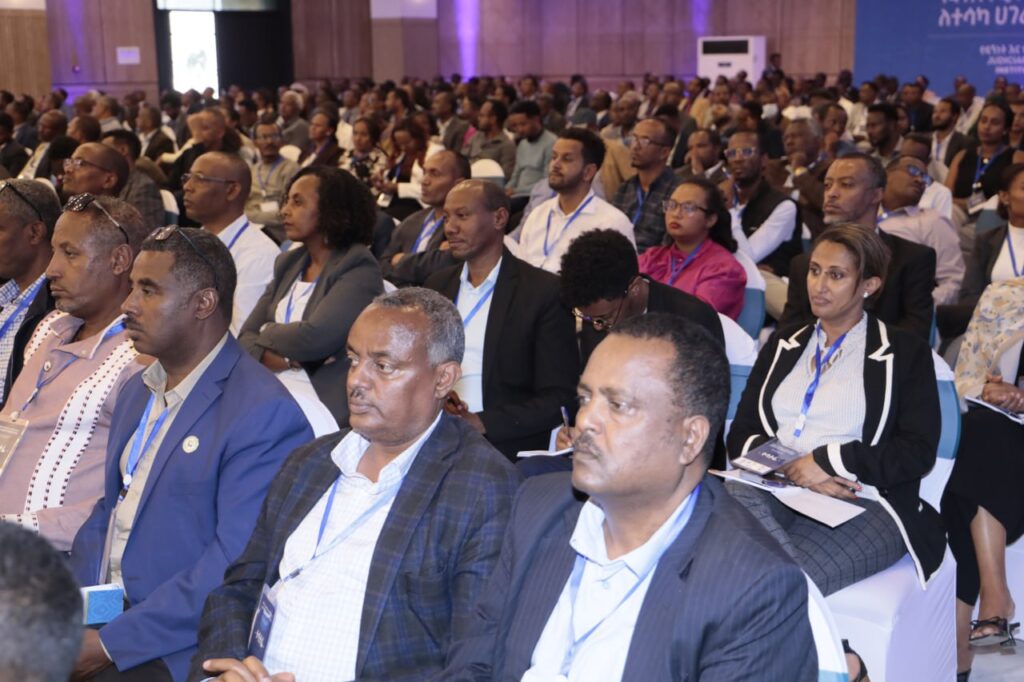
The Chief Commissioner explained that the conducive environment and enhanced capacity created by these reform measures enabled the Commission to process over 8,000 human rights violation complaints over the past five years. Key achievements include the conduct of more than 60 large-scale investigations into human rights violations—including the Joint Investigation Report produced in collaboration with the United Nations Office of the High Commissioner for Human Rights (OHCHR)—and the subsequent submission of these reports to relevant authorities. He further noted that, following the recommendations issued in the joint investigation report, Ethiopia’s National Transitional Justice Policy was drafted and adopted. The Commission was granted ‘A-Status’ accreditation for its full compliance with the Paris Principles, particularly in recognition of its ability to carry out its work impartially, the credibility of its human rights monitoring, investigation, and advocacy activities, and the institutional relationships it has established. Additionally, during the General Assembly of the Network of African National Human Rights Institutions (NANHRI) held on February 4, 2026, in Yaoundé, Cameroon, EHRC was selected to host the upcoming General Assembly and the 16th Biennial Conference. Concurrently, the Chief Commissioner of the EHRC was elected as the Vice-Chairperson of the Network for a two-year term.

The Chief Commissioners further elaborated that by the establishment of Information, communication and technology infrastructure and digitalization of its operations, several digital systems have been put into use including a digital platform for receiving and processing complaints, a digital database for conducting human rights investigations and archiving institutional documents; and an official website for sharing public information. Furthermore, digital mechanisms have been deployed to facilitate information exchange among the Commission’s leadership, staff, and partners, as well as to streamline human resource and financial management.

EHRC’s future strategic priorities were also highlighted, including strengthening institutional independence, credibility, and impartiality; enhancing collaboration and partnerships with stakeholders; identifying and ensuring the protection and promotion of emerging human rights issues; improving the Commission’s accessibility; and intensifying human rights education. It was also noted that the Commission will continue supporting national initiatives, including the transitional justice process and the work of the National Dialogue Commission. During a subsequent discussion, EHRC responded to a question concerning its position on broader national agendas. In its response, the Commission emphasized that its mandate is the promotion and protection of human rights and that it remains committed to partnering on agendas directly related to this mandate, while clarifying that it does not participate in any agendas that could compromise its institutional independence and impartiality.
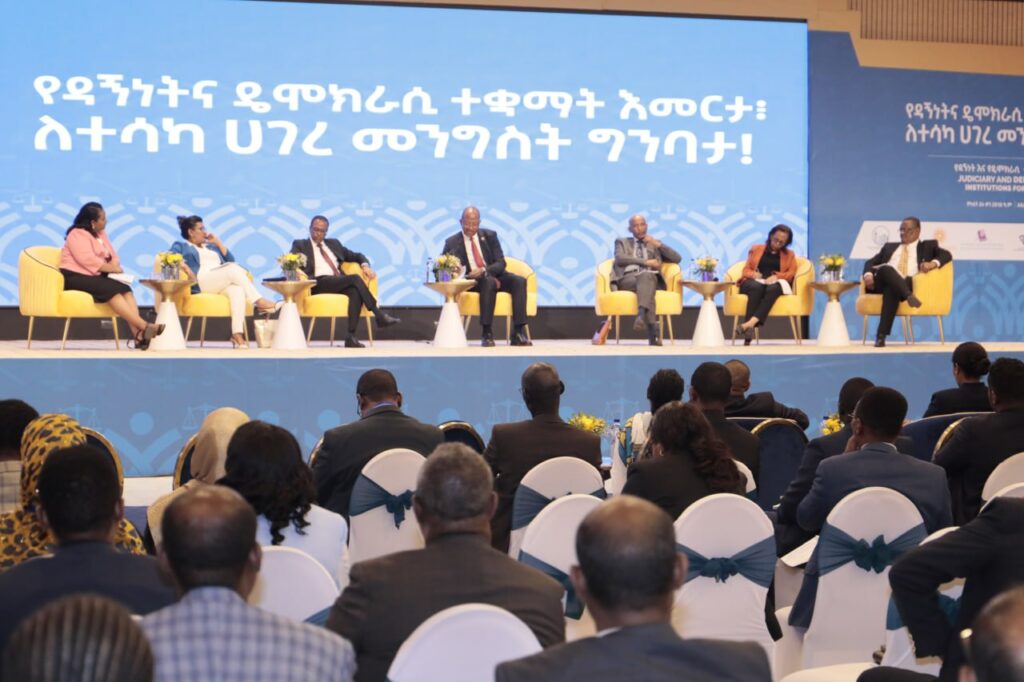
The Speaker of the House of Peoples’ Representatives, Tagesse Chafo, emphasized that judicial and democratic institutions must collaborate with a particular focus on institution-building, including the strengthening of legal frameworks, human resource development, and technological infrastructure. He reaffirmed the House’s commitment to provide support and cooperation to advance these efforts. The Speaker also urged the institutions to continue making significant contributions to the nation-building process by consolidating the reform measures undertaken within their respective sectors.
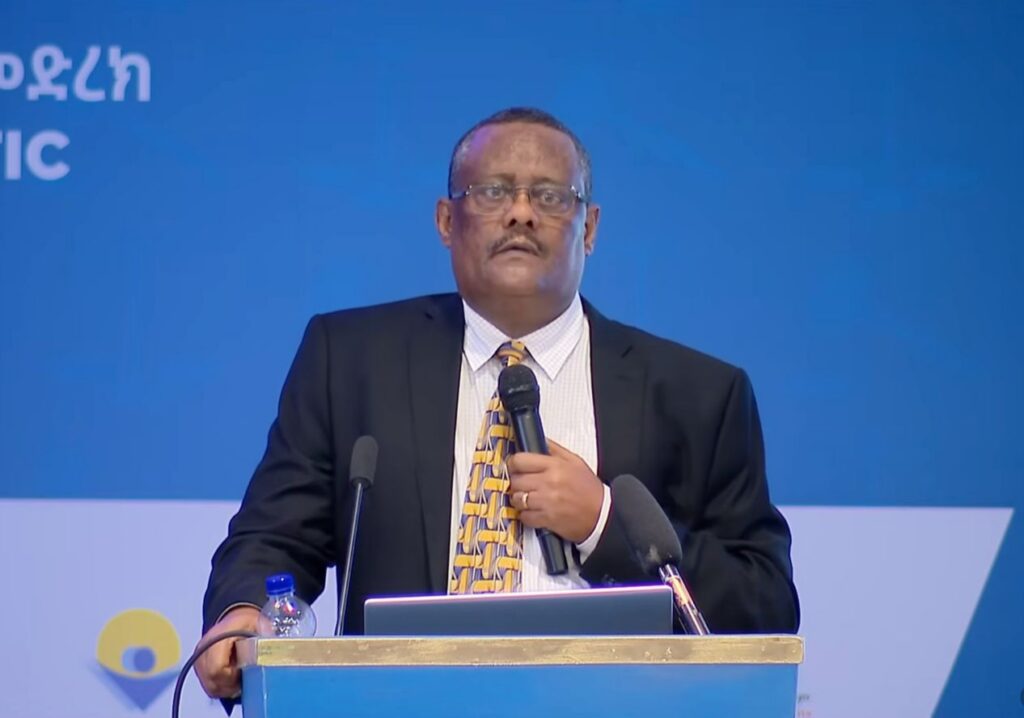
EHRC Chief Commissioner Berhanu Adello noted that all issues, including those related to democratic and judicial activities, are inextricably linked to human rights, and reaffirmed EHRC’s commitment to working with all stakeholders while maintaining its institutional independence and impartiality. He further called upon all participants to contribute to the development of a human rights culture in Ethiopia by ensuring the provision of human rights-centered services.