

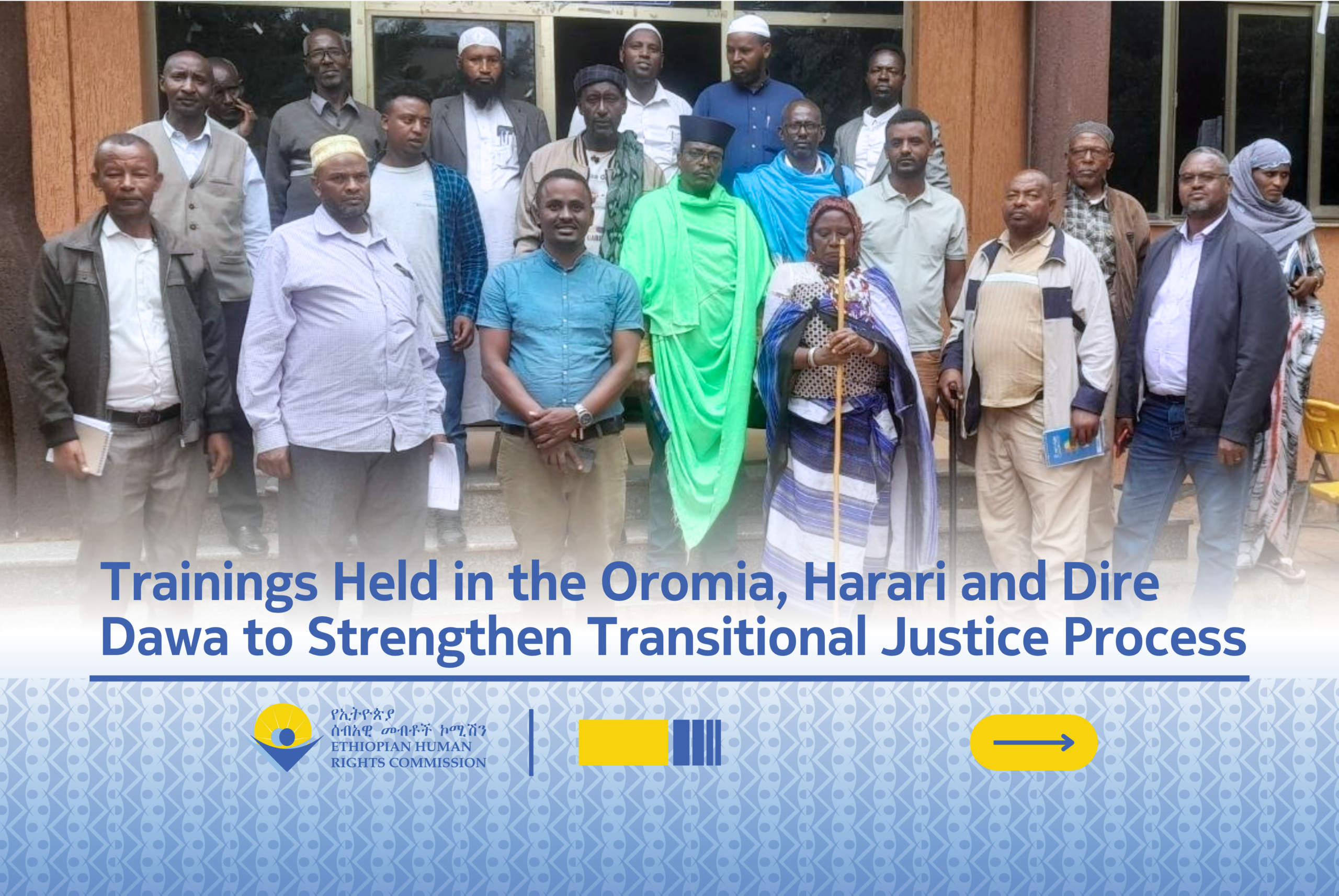
The Ethiopian Human Rights Commission (EHRC) has provided trainings in the cities of Adama, Dire Dawa, and Yabelo to civil society organizations and community leaders in the Oromia Region. The trainings are aimed to ensure active engagement of participants in Ethiopia’s transitional justice process through strengthening their capacity to influence the process to be victim-centered, inclusive, and compliant with international human rights standards.
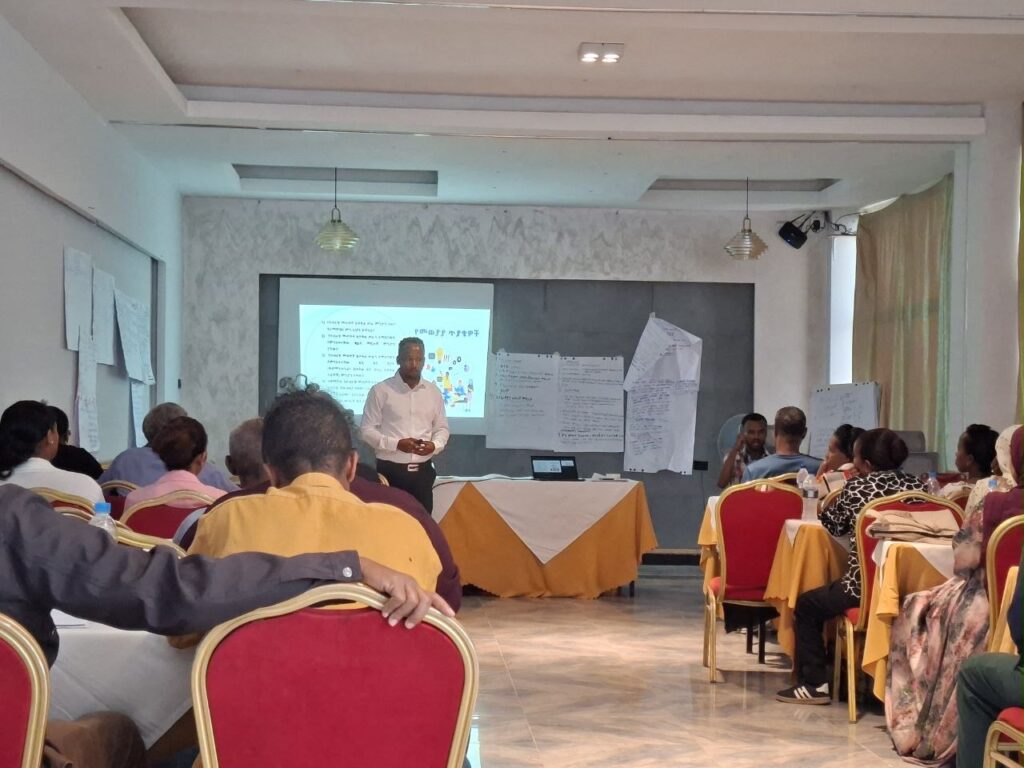
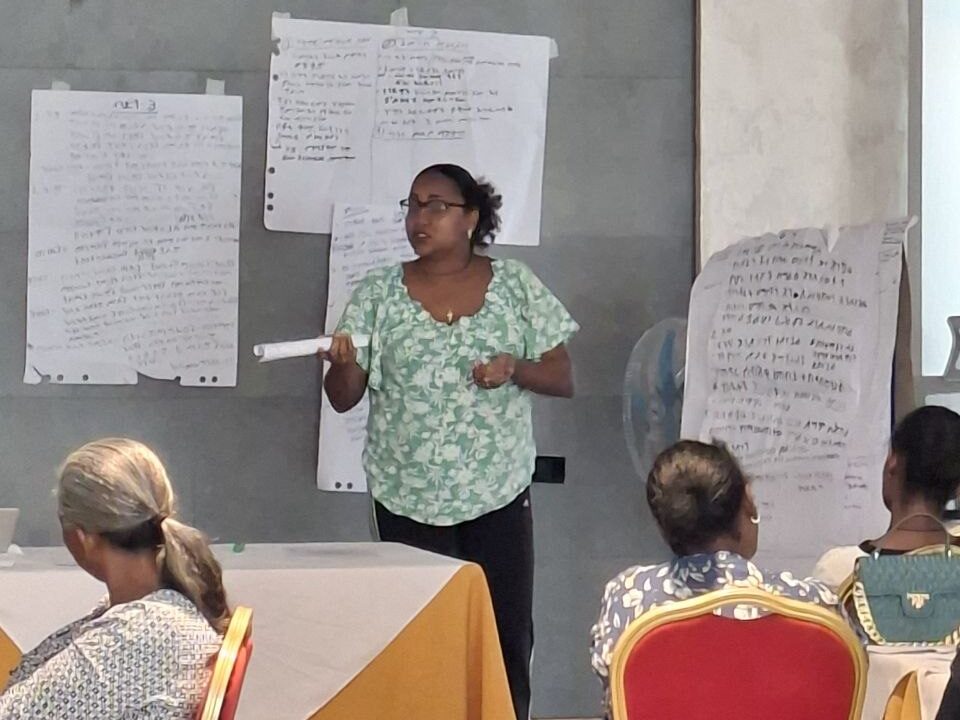
Representatives from 29 civil society organizations operating in the Oromia Region participated in the training held in Adama city from November 2 to November 6, 2026. The training enhanced participants’ understanding of transitional justice and its core pillars. It also strengthened their knowledge and capacity to promote a participatory, victim-centered, inclusive and human rights based transitional justice process. Additionally, participants engaged in practical exercises aimed at developing their skills in monitoring, documenting, and advocating against human rights violations within the context of transitional justice.
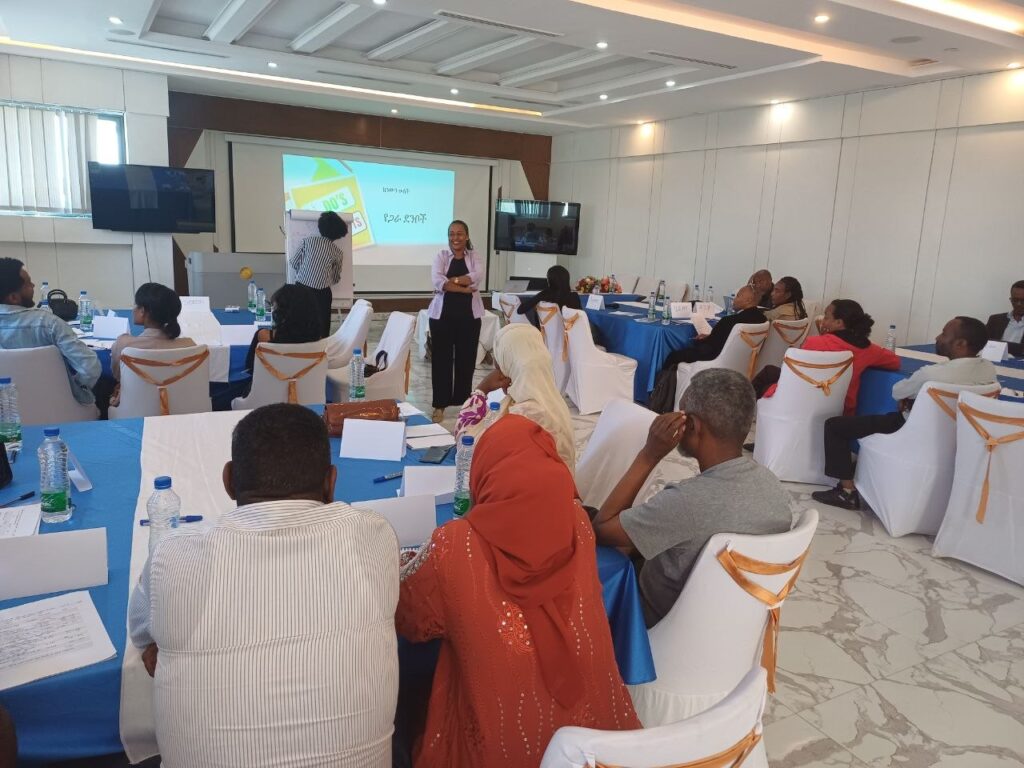
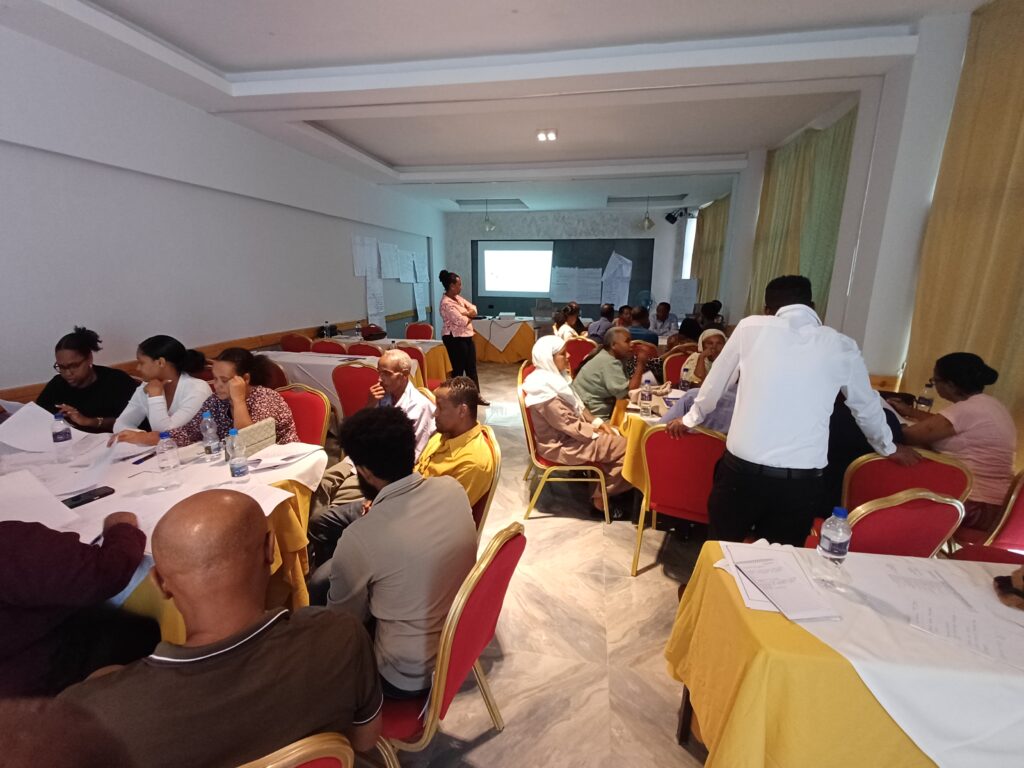
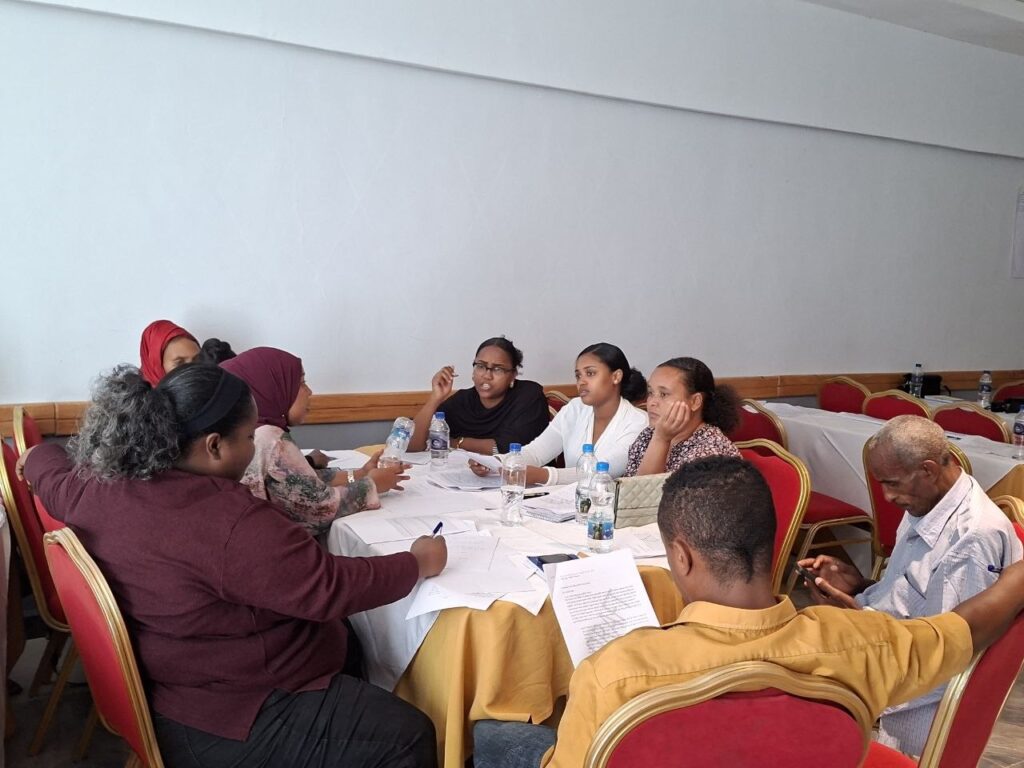
Similarly, EHRC conducted a training focusing on human rights and transitional justice for members and leaders of civil society organizations drawn from the Dire Dawa City Administration and the Harari Region in Dire Dawa city from November 9 to November 13, 2026. A total of 35 trainees from various institutions including associations representing persons with disabilities and people living with HIV—participated in the training.
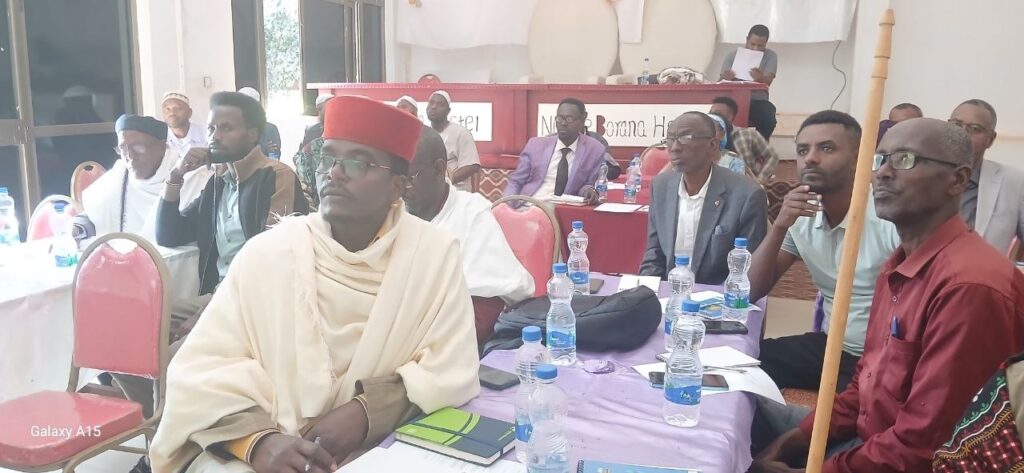
On the other hand, the Commission provided training focusing on human rights and transitional justice in Yabelo town from November 9 to November 11, 2026 for community leaders drawn from religious institutions, Abba Gadaa, Haadha Siinqee establishments, and customary courts from the Borena Zone and surrounding districts. Held in the Southern Cluster of the Oromia Region with the participation of 35 representatives, the training aimed to strengthen the role of community leaders in human rights protection and the transitional justice process. By examining the experiences of religious leaders and traditional elders in transitional justice processes in other countries, the session helped participants acquire the knowledge and awareness needed to participate in the process with a sense of ownership. Furthermore, this training created an opportunity to foster broad awareness by reaching community institutions in the Oromia Region that had previously been inaccessible due to various security conditions.
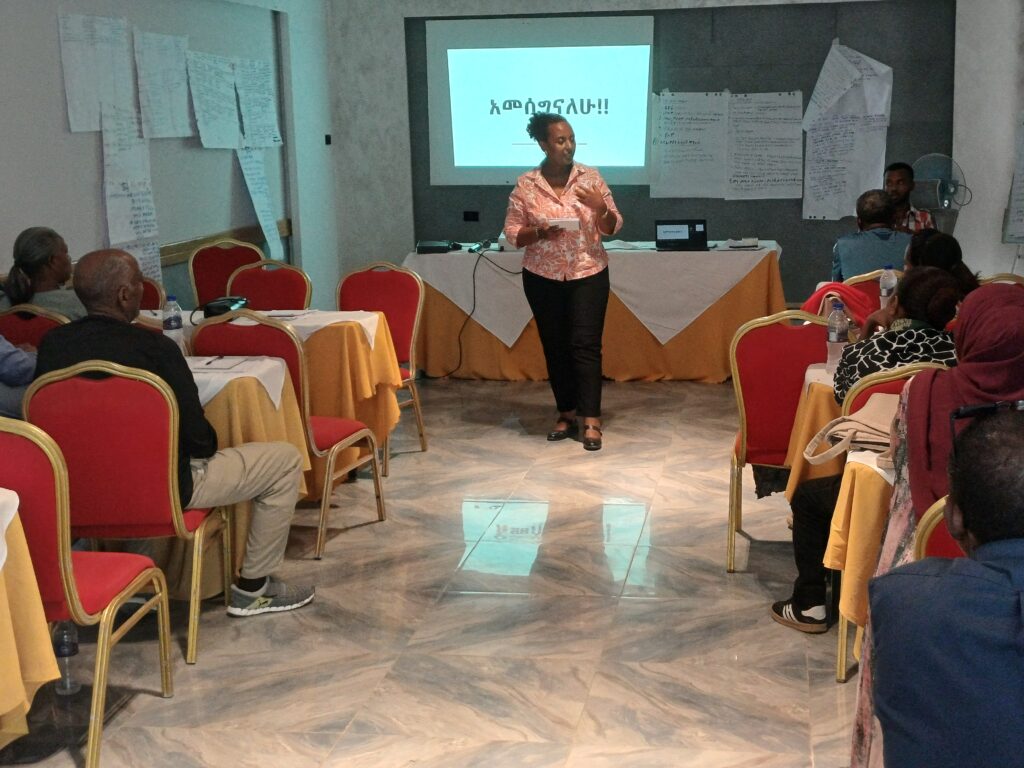
Delivering remarks regarding the training, Dr. Mekdes Tadele, Senior Director of the Human Rights Education Directorate at EHRC, noted that civil society organizations play a vital role in ensuring that the transitional justice process respects human rights and remains victim-centered. Dr. Mekdes emphasized that civil society organizations bear significant responsibility in expanding knowledge and awareness about transitional justice within the community by documenting human rights violations, providing psychosocial and legal support to victims, and advocating for implementation of legal and institutional reforms.